
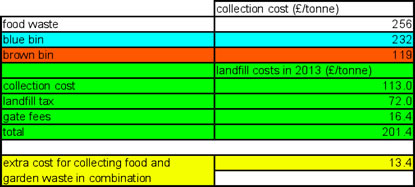
Figure 1: The cost of collecting waste
Glasgow Council expects mediocre performance from a source separated waste food collection system. This has resulted in the council expecting the cost of collecting waste food to be significantly high, at £256 per tonne. However, Glasgow city council is facing increasing pressure to decrease the amount of rubbish it puts into landfill. Legislation was introduced in April 2009 that increases the tax on landfill waste by £8/tonne per year until 2013/14 when the landfill tax will be £72/tonne . The near doubling of the landfill tax in 4 years is putting pressure on the council to consider methods that will decrease the amount of waste that it puts in landfill. Therefore this cost and the gate fees at the landfill site have been included against the cost of the food collection. It is the difference between this total and a revised food collection cost which is used to estimate the extra cost of collecting waste in Figure 6. The revised food collection cost considers the prospect of mixing the waste food with garden waste, which is already collected during the summer months. This means that the proposed extra cost of collecting food waste mixed with garden waste will be considerably reduced to £13.4 per tonne. It was predicted that twice as much food waste would be collected per year, reflecting garden waste is only collected for half the year. The cost of dealing with the digestate is not considered because the sludge pelleting process would have already been in place to deal with existing sludge.
The costs first assumed that the electrical energy production of the biogas plant could be used by the sewage works, or surrounding community, through an electrical connection. This meant that the price these consumers would have paid for the electricity the biogas plant supplied could be considered as an earning for the plant. It was then considered that the plant would export the power to the national grid. Both of these scenarios were then considered with feed in tariffs added to the rates paid for the electricity, plus a generation allowance of 1.5pence was added to the cost of the electricity.
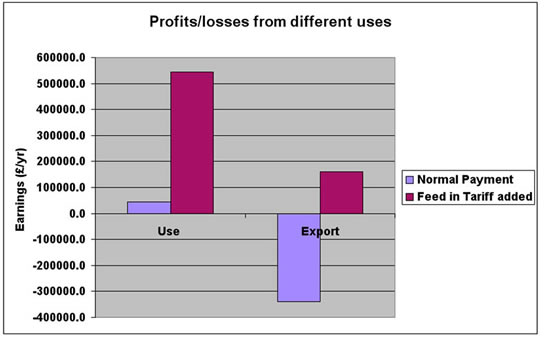 Figure 2: The Earnings of the plant under different power uses
It appears that the Dalmarnock plant is incapable of paying for itself unless all of the energy can be used on site. When feed in tariffs (FITs) of 9p/kWh and a 50% generation export assumption allowance was considered were the plants able to produce a profit.
When considering the whole process, it seems that for anaerobic digestion to be economically feasible there needs to be a steady source of waste that is easily accessed and capable of generating reasonable amounts of methane, as is the case with the sewage waste. The organic municipal waste stream for the Dalmarnock plant is capable of generating significant amounts of methane, but gathering this waste is one of the significant costs of this process. The perceived extra cost of collecting the waste is greatly reduced by the fact that the government is introducing a much higher landfill tax, whilst the amount of money available for the power generated is greatly increased by the use of feed in tariffs. This indicates that the Dalmarnock process, in its current guise, is heavily reliant on government support. However, this could be justified if it prolongs the life of landfill sites and improves the carbon footprint of the area.
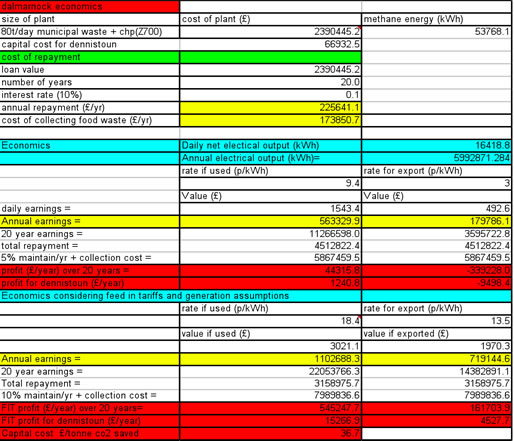
Figure 3: The predicted economic performance of the Dalmarnock plant