Device Types
The two devices we have chosen to concentrate on in this project are; a Ducted Wind Turbine and a 2.5kW Horizontal Axis Wind Turbine, manufactured by Proven Energy.
These devices use different methods to extract energy from the wind, and can be mounted on the roof of inner city buildings.
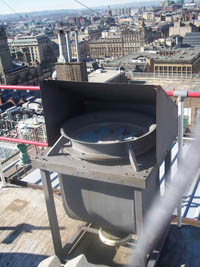
We have access to a prototype DWT on the James Weir Building and are interested in a project to mount a 2.5kW proven HAWT on the Newberry Tower at the Glasgow School of Art.
Ducted Wind Turbines
A Ducted Wind Turbine takes advantage of the wind passing over the edge of a building. Positioned along a building edge, a DWT channels the wind through a duct, the air current passing over the top causes a larger pressure difference within the duct than would be achieved in a free airflow. A Turbine placed on a vertical axis with in the duct extracts the wind energy.
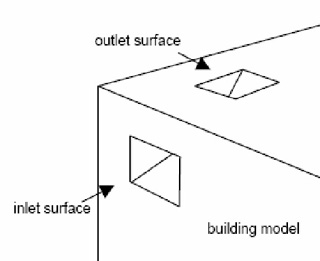
These devices do not yaw in the wind and it is proposed that a number of devices are positioned along each aspect of a building to extract energy from different wind directions.
Proven 2.5kW HAWT
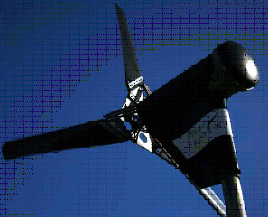
The Proven HAWT is a down wind turbine. It uses cleverly designed plastic blades to extract wind energy. These blades have the ability to bend inwards in strong gusts to protect themselves. This bending also changes the aerodynamic qualities of the blades, and allows the turbine to operate at its rated value even in very high wind speeds. A wind vane is part of the construction and allows the turbine to yaw for rapid changes in direction.
Both devices use a permanent magnet generator. This reduces cost and improves simplicity, as no gear box is needed.
There are some other suitable devices on the market including the SWIFT and Windsave. There is also research going on into vertical axis wind turbines, which are considered more pleasing to the eye.