

|
|
 |
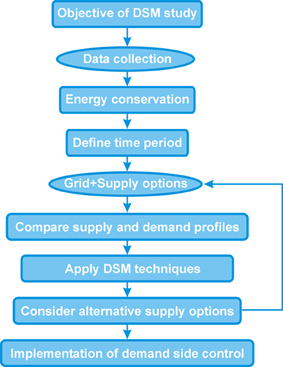
In recent years there has been an increasing amount of renewable generation connecting to the grid. The output from this generation is stochastic in nature, often changing in time periods of under an hour. We need to find a way to make better use of this fluctuating supply, as there will be an increased amount of this type of generation coming on line in the near future. Also if there is better use of this supply hopefully it will encourage more renewables to become grid connected. We identified this project as one which we could develop through our literature review of the area. During our review we discovered a large amount of information on renewable technology and an equally large amount on energy management, but there did not seem to be any previous work to link the two areas. Resulting from this we decided to develop a flexible, step by step methodology to address these issues. We thought that we could make better use of this supply so our project aim was to create a general methodology of how to approach Demand side management and control in networks supplied by embedded generation. The methodology was designed to be flexible enough to allow its application across a range of built environments, ranging from individual buildings up to a small community. We then applied it to different case studies to test the methodology. Our methodology was not a closed process, with the initial construction steadily evolving and expanding as we moved through the project and further adjustments were made after its application in the two case studies. Our methodology developed along the sequence of pathways: |
 |
|
Data collection The climate, hot water and heating demand for the buildings in the study area are measured and recorded. The physical details about the size and makeup of the site will need to be covered in detail. Energy conservation Calculating the demand is necessary in order that the appropriate technology can be sized for the supply. The first stage in this process will be to reduce the energy demand as low as possible, so that the supply can be used efficiently. Define time period The total energy used in the study area has to be calculated so appropriate technology can be sized for the supply. A period of time has to be specified so that the energy use over that time can be calculated. We would recommend that the seasonal demand is calculated at a stage in this process as it will allow any weather related trends in energy use to become apparent. Grid and supply options With the data collected earlier, some recommendations could be made for suitable technologies that will supply enough energy in the form and at the intensity required. There are a number of supply options that can cater for heat and electricity demand. In many cases this will depend upon the geographical location of the site and topology of the area. Other issues may have an influence, for example in the case of remote communities the economics of connecting to the grid may have a considerable bearing on the outcome. Compare supply and demand profiles The supply and demand profiles are matched to see whether the embedded generation will be able to successfully supply the case study area. If the supply can match the level of demand, but there is a temporal mismatch between the two, then we need to investigate shifting loads within the demand profile. Apply DSM techniques To use the electricity efficiently, the system has to flexible enough so that it can move the loads on the network to times when the supply is plentiful. If there is an excess of electricity, the surplus can be fed into the grid. If the excess is a relatively small amount, or it is not economically viable to have this bi-directional system, then the excess electricity can be dumped as waste heat. Storage can be considered, but only as a last resort because it usually an expensive option. We believe that it can be avoided in most cases. Consider alternative supply options You may have to consider alternative or additional supply options because the supply profile from your selected technology may not match your demand profile. If the demand is simply too high, more supply can be added. If stability is required, then grid connection, Combined Heat and Power or diesel generators may be considered. If more supply is necessary, the process will loop and the profiles will be reassessed. Implementation of demand side control Once the generation has been correctly sized and demand side control has been deemed to be required, a way to implement it must be found. The control system must be able to relay enough commands to allow good system control and the response must occur relatively quickly. |
|
Top  |