One of the main arguments for a heavy investment into biofuels is the possible environmental benefits.
Since biofuels are partially carbon neutral then one of the main benefits is a net reduction in CO2 emissions. As described in the Life cycle assessment section, a 2% biodiesel and 5% bioethanol blend will result in a 0.72% and 1.9% reduction in CO2 emissions respectively (based on 2000 emissions). This total of a 2.62% reduction seems worthwhile until one takes into consideration the economic costs that would be incurred.
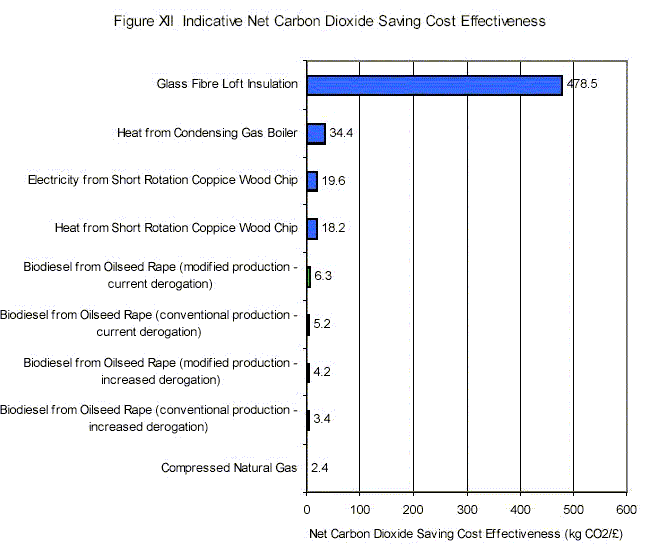
The table below is taken from reference x and compares the CO2 reduction effectiveness of various energy saving and electricity producing measures.
|
What can be seen from this table is that there are many more economically effective ways to reduce CO2 emissions.
With regards to local air pollution, it is difficult to arrive at any definite conclusions. Many different tests had been conducted on tailpipe emissions using biofuels with varying results. Generally speaking, biofuels did improve on most emissions but in each case different vehicles were run under different conditions. It is fair to say that biofuels are probably cleaner but this is by no means definite. Even assuming that biofuels are cleaner, then similar to CO2 emissions the relatively marginal benefits do not outweigh the very high costs.